To help the Class of 2025 undergraduate students gain a comprehensive understanding of their majors and clarify their academic development paths, the School of Earth and Environmental Sciences held a Major Awareness and Academic Planning Q&A Session at Qinling Hall on the Yuzhong Campus. The event featured separate sessions for the two major disciplines—Geographical Science and Environmental Science & Engineering—and invited department heads, program directors, and key faculty members from the relevant programs to answer questions and provide guidance.
Geographical Science Session: In-depth Interpretation of the Major and Clarification of Disciplinary Development Directions
The session for Geographical Science was held in Classroom A214 of Qinling Hall. Faculty members in attendance included Yang Xiaoyan, Geng Haopeng, and Li Guoqiang from the Physical Geography and Resource Environment program; Yang Yongchun, Ma Guoqiang, and Jia Zhuo from the Human Geography and Urban-Rural Planning program; and Nian Yanyun and Zhang Kai from the Geographic Information Science program. The session was hosted by Li Ting, Deputy Party Secretary of the School.
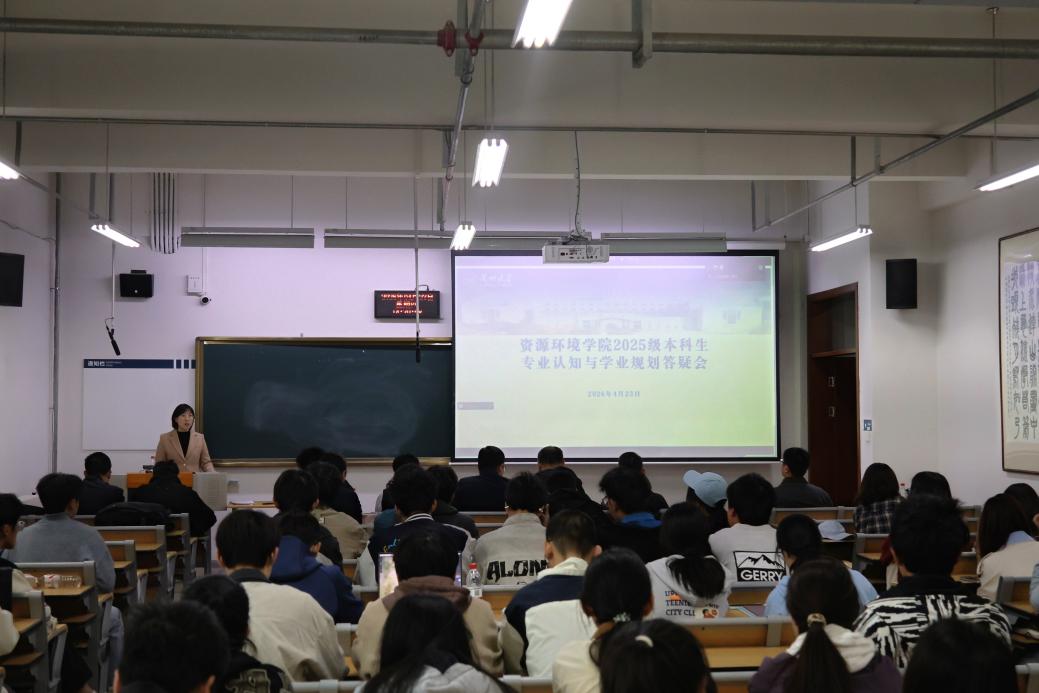

Professor Geng Haopeng from the Physical Geography and Resource Environment program started from the disciplinary essence of geographical science, elaborating on the core theme of "human-land relationships". He emphasized that geographical research consistently adheres to the principles of being people-oriented and learning from nature, and that the three majors within the discipline complement each other and are inseparable. He pointed out that national development cannot do without the strong support of basic disciplines such as geography, and that studying geography requires a hardworking and persevering spirit. Professor Li Guoqiang, from a practical perspective, provided detailed answers to students' core concerns, including pathways for professional development, directions for further academic research, career planning, and the graduate school recommendation rate, helping students clarify key points in their academic progress.
Professor Yang Yongchun from the Human Geography and Urban-Rural Planning program emphasized, from the perspective of the current era, that China is at a critical stage of rapid transformation, with ecological civilization construction and balanced regional development being major issues of the time. He noted that the program consistently focuses on human-land relationships, and that students should pay attention to knowledge integration and framework building in their studies, striving for deep understanding while strictly adhering to the basic requirements of professional training.
Professor Nian Yanyun from the Geographic Information Science program introduced that as an interdisciplinary field, the program is highly tool-oriented and can assist in decision-making and improve work efficiency. With the integration of artificial intelligence technology, its application scenarios have become even broader. The school will also provide students with abundant practical platforms and fully support the enhancement of their professional skills.
During the interactive Q&A session, Professors Yang Xiaoyan, Ma Guoqiang, and Jia Zhuo patiently answered questions raised by students.


Environmental Science & Engineering Session: Systematic Explanation of the Program Framework to Strengthen Academic Development Foundations
The Environmental Science & Engineering session was held in Classroom A216 of Qinling Hall. The session was hosted by Professor Guan Qingyu, Associate Dean of the School. Faculty members in attendance included Professors Li Xiaoli and Zhu Hao from the Environmental Science and Environmental Engineering programs, as well as Academic Affairs Secretary Liu Xingde.
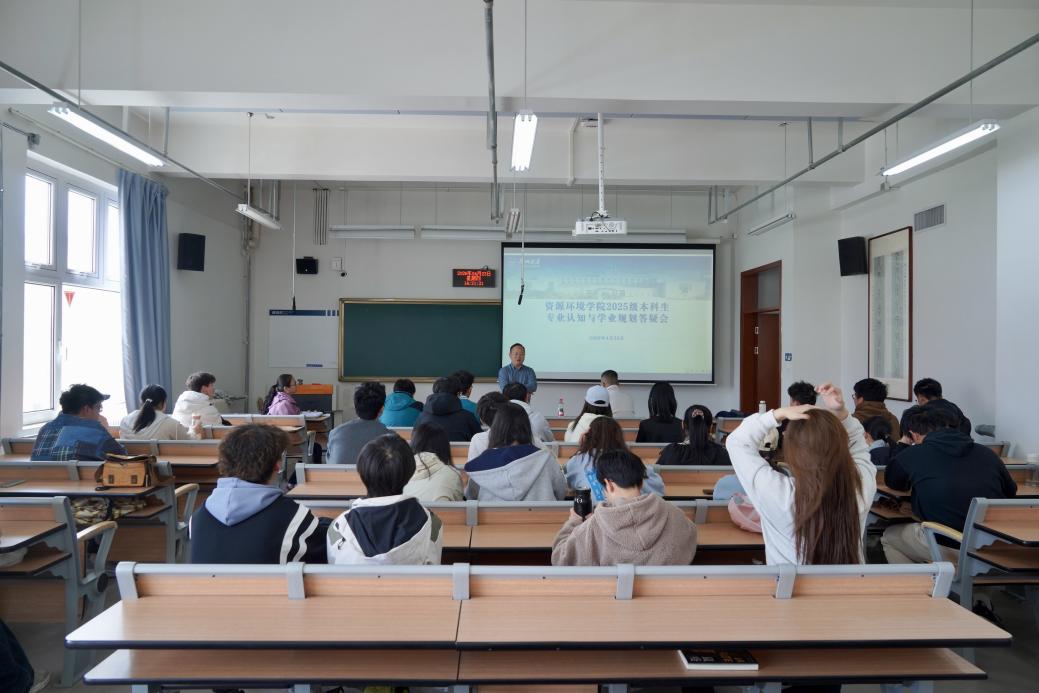
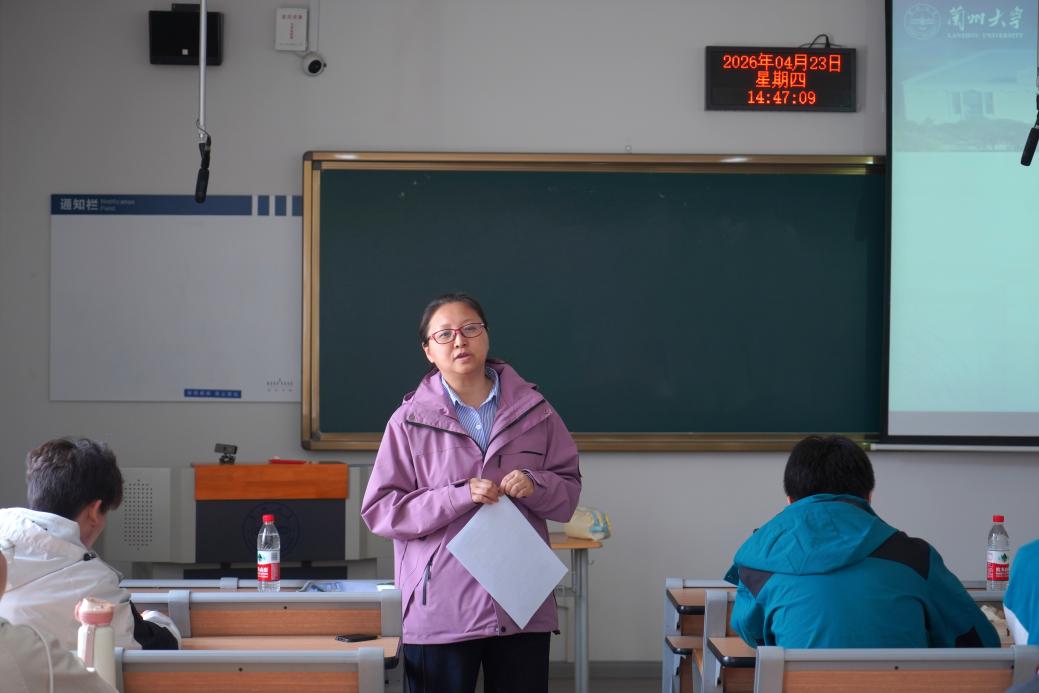

Professor Guan Qingyu first provided a systematic overview of the environmental programs, covering aspects such as program training objectives, curriculum design, development history, and future directions. This helped students build a comprehensive understanding of the programs and deepen their appreciation of the disciplinary connotation. Subsequently, Professor Zhu Hao, drawing on his own teaching and research experience, shared insights on learning methods and competency development in the environmental field. He gave detailed explanations on foundational course study, practical skill enhancement, and participation in research, encouraging students to strengthen their theoretical foundation while actively engaging in practical activities to continuously improve their overall competence.
Interactive Q&A to Address Questions
During the Q&A sessions of each program, Mr. Liu Xingde provided explanations and answers regarding major allocation (specialization selection). On the one hand, drawing on his own academic experience, he offered practical advice from a student's perspective on choosing a major, managing study pace, and planning university development pathways. On the other hand, as academic affairs secretary, he provided detailed explanations on the policies, procedures, and important considerations of the major allocation process, helping students clearly understand the requirements and relevant regulations.
Clarifying Directions to Support Student Development
This Q&A session precisely addressed the needs of the Class of 2025 undergraduate students in terms of major orientation and planning. It resolved student queries from multiple perspectives—program philosophy, development pathways, and practical applications—helping students fully understand the unique features and prospects of each major, clarifying their ideas for academic and career development, and laying a solid foundation for subsequent major selection and academic progress.


