To deeply implement the educational philosophy of practical talent cultivation, bridge the gap between classroom theoretical teaching and field investigation, and effectively enhance the practical skills and research competence of students majoring in Environmental Science and Engineering, on the afternoon of July 7, the School of Earth and Environmental Sciences, Lanzhou University successfully held a cross-university field practice course joint internship exchange meeting. The joint internship team was well-staffed with instructors and participants. The teaching team was led by Professors Liu Lichen and Xu Min from the School of Earth and Environmental Sciences, Lanzhou University, along with Professor Liu Jianguo from Xiuzhong College, Tsinghua University, and two doctoral assistants. The trainees included students from multiple academic levels and institutions: 10 undergraduate students from the Class of 2024 majoring in Environmental Science and Environmental Engineering at Lanzhou University, 7 undergraduate students from Xiuzhong College, Tsinghua University, and 4 senior high school students from Gansu and Sichuan provinces, collectively forming this cross-university joint internship team.
During the meeting, Professor Liu Lichen from Lanzhou University outlined the core learning principles for the field practice course. He proposed five key requirements for practical learning norms: "observe more, listen more, record more, ask more, and think more". He emphasized that field practice is a standardized, professional immersive classroom rather than a loose outdoor learning activity. All participating students must strictly adhere to practice classroom discipline, maintain a diligent attitude, devote themselves wholeheartedly to practical work, and fully engage in field learning and ecological research. Additionally, Professor Liu Lichen placed special emphasis on safety protocols for the fieldwork, detailing safety precautions to fortify the safety foundation for this field internship.
Professor Liu Jianguo from Tsinghua University, drawing on current trends in environmental science, industry development needs, and the patterns of youth growth, expressed his earnest expectations for all participating students. He noted that this cross-university fieldwork is a precious opportunity to hone professional skills and accumulate research experience. He encouraged students to focus on three core professional competencies—field sampling, experimental analysis, and thematic investigation—and to actively explore and think during field surveys and observations, identifying research topics with practical value and scientific significance. He remarked that stepping out of the traditional classroom and into the natural landscape allows students to directly perceive the overall pattern and operational laws of mountain-water ecosystems, and to immerse themselves in the essence and value of natural ecology. He hoped that students would empower their growth through practice, solidifying their professional foundation and broadening their academic horizons while traversing mountains and rivers.
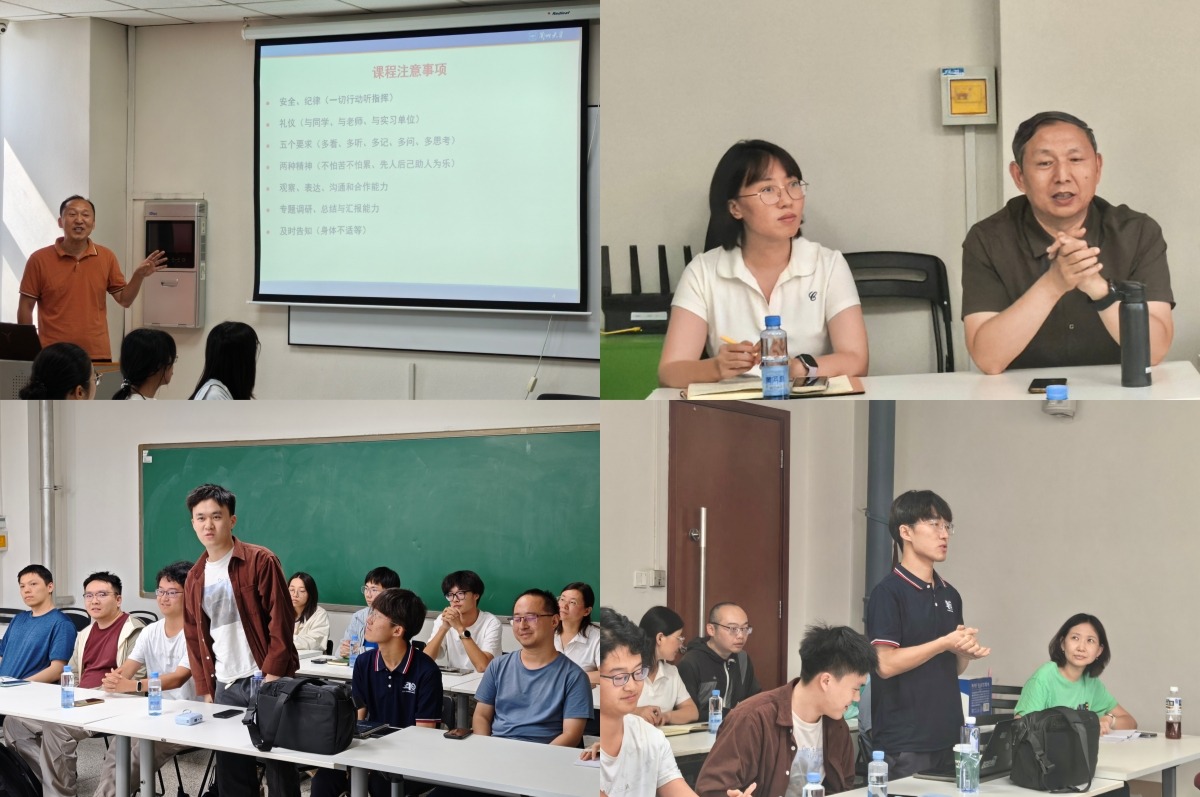
Li Ting, Deputy Party Secretary of the School of Earth and Environmental Sciences, Lanzhou University, expressed her hope that all students would cherish this practical opportunity, be diligent and inquisitive during the internship, help each other, think actively, and excel in summarizing their experiences. In this "walking ecological classroom", she encouraged them to deeply understand the core essence of integrated conservation and restoration of "mountains, waters, forests, farmlands, grasslands, deserts, lakes, and ice", and to profoundly grasp the strategic importance and contemporary value of ecological civilization construction in the socialist cause with Chinese characteristics in the new era.
This cross-university joint internship exchange meeting unified the team's understanding, clarified learning objectives, and detailed practical tasks, laying a solid foundation for the orderly and efficient conduct of the subsequent field internship. Looking ahead, all members of the internship team will strictly adhere to discipline, be diligent in learning and thinking, and act with determination to steadily advance various field research tasks. They will proactively explore directions for scientific innovation, measure the "green mountains and clear waters" with their footsteps, protect the ecology with their professional knowledge, and earnestly fulfill the youth mission of "traversing thousands of mountains to observe the ecology, and holding fast to their original aspiration to safeguard the rivers and mountains".


