The plane trees were in gentle bloom and the autumn air slightly cool, yet Classroom B105 in Qinling Hall at Lanzhou University was lively and animated. On September 7, Academician Qin Dahe of the Chinese Academy of Sciences delivered an online lecture for undergraduate students of the Classes of 2023 to 2025 in our school as part of the course Introduction to Cryosphere Science. Professor Mu Cuicui of the School of Earth and Environmental Sciences assisted Academician Qin on site in completing this "first class" of Cryosphere Science.
In the classroom, Academician Qin explained the concepts and research scope of the cryosphere and cryosphere science, the relationship between the cryosphere and the climate system, the role of cryosphere science in economic and social development, and cryosphere science and geopolitics, among other topics. He pointed out that students should engage in systematic learning from three aspects—basic knowledge, basic concepts, and basic skills—and combine theory with practice to lay a solid foundation for future scientific research.
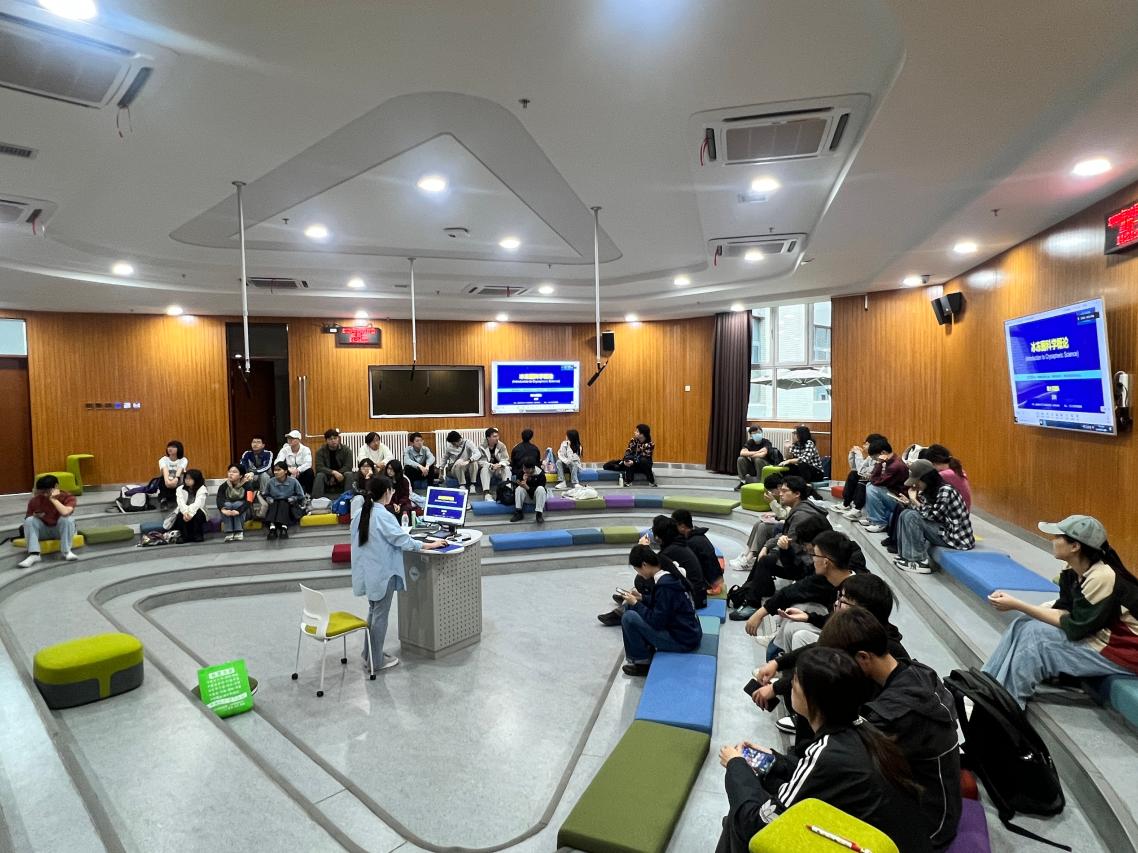
Academician Qin emphasized that against the backdrop of global warming, the cryosphere is undergoing rapid and widespread retreat, with various disasters and extreme events occurring frequently. He hoped that students would think deeply about the causes behind these abrupt changes and their impacts on the natural world and human society, and actively follow the frontiers of cryosphere science. In addition, Academician Qin encouraged students to study English well and to use cryosphere science terminology correctly.
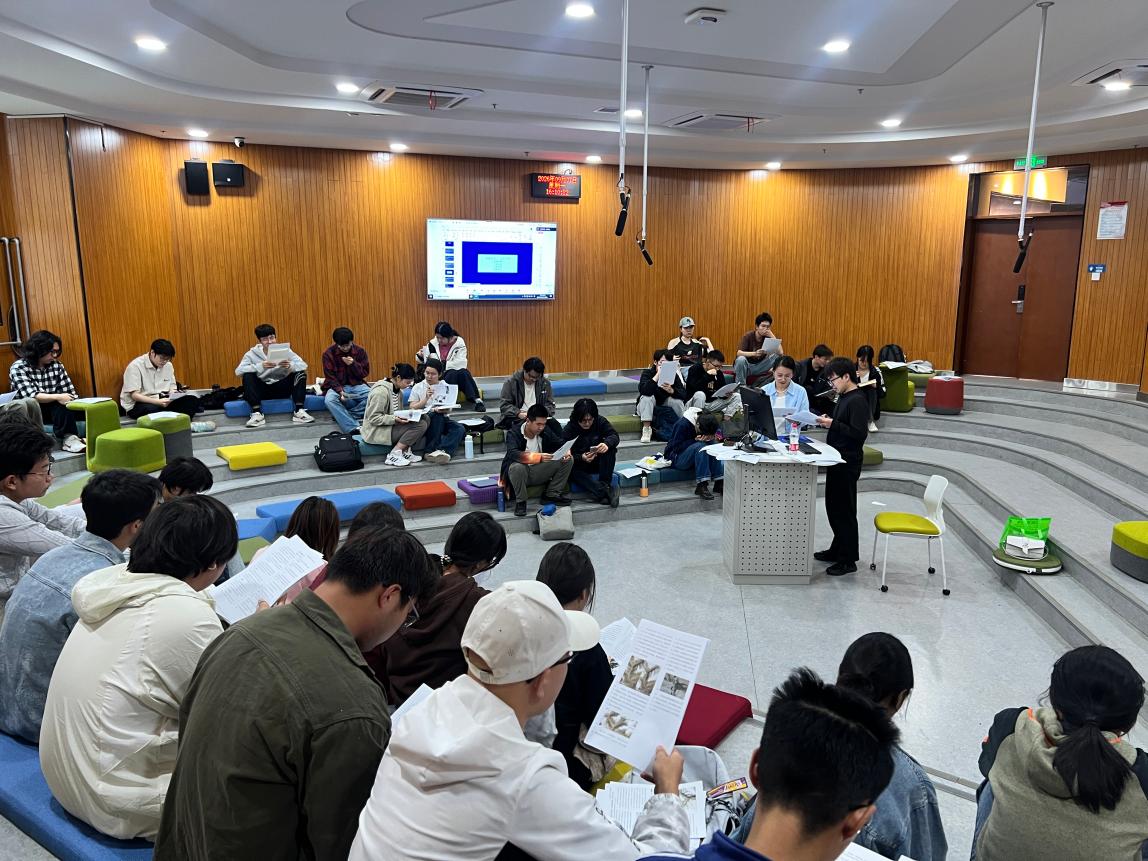
During the class, Researcher Xu Xinwu interacted and discussed with the students online through listening quizzes, reading error-correction exercises, and student representative presentations. To further consolidate the students' understanding of the course content, Professor Mu Cuicui organized group discussions in class, after which representatives from each group shared their takeaways with the class. They received praise from Researcher Xu Xinwu as encouragement to study even harder. This class enriched the students' understanding of cryosphere science, sparked their interest in the field, and left them deeply inspired.
Biography of Academician Qin Dahe:
Academician Qin Dahe is a Member of the Chinese Academy of Sciences and a Member of the World Academy of Sciences for the Developing World (TWAS). He led the establishment of the State Key Laboratory of Cryospheric Science and constructed the theoretical framework of cryospheric science. He participated in and led the IPCC's Third Assessment Report (TAR), Fourth Assessment Report (AR4), and Fifth Assessment Report (AR5). He led the design and compilation of the China Climate and Eco-Environmental Evolution Assessment Series scientific reports and national reports, as well as the National Assessment Report on Extreme Weather and Climate Events and Disaster Risk Management and Adaptation in China. He also led the Research on China's Meteorological Development Strategy, in which he proposed the new concepts of "public meteorology, safety meteorology, and resource meteorology". He previously served as Chief Scientist of National 973 Program projects and as the lead of the cryospheric science research group funded by the National Natural Science Foundation of China. He has published over 100 papers and monographs. He has received the Nobel Peace Prize, the International Meteorological Organization (IMO) Prize, the International Volvo Environment Prize, the Second Prize of the National Natural Science Award, and the First Prize of Natural Science Awards from the Chinese Academy of Sciences and Gansu Province. In recent years, he has received the Chinese Academy of Sciences Outstanding Achievement Award, the International Geographical Union (IGU) Lifetime Achievement Award, and the International Union for Quaternary Research (INQUA) Lifetime Achievement Award.


