At the invitation of Prof. Zhang Baoqing, and Assoc. Prof. Peng Tingjiang from the School of Earth and Environmental Sciences, Lanzhou University, and the Key Laboratory of Western China's Environmental Systems, Ministry of Education, China, Assoc. Prof. Zhong Ming from Sun Yat-sen University visited our university for academic exchange and delivered a lecture.
Reporter: Assoc. Prof. Zhong Ming
Title: Deep Learning-Driven Multivariate Flood Risk Simulation and Disaster Prevention and Control
Time: 10:00-11:30, July 7, 2026 (Tuesday)
Venue: Meeting Room 501, Qilian Hall, Chengguan Campus, Lanzhou University
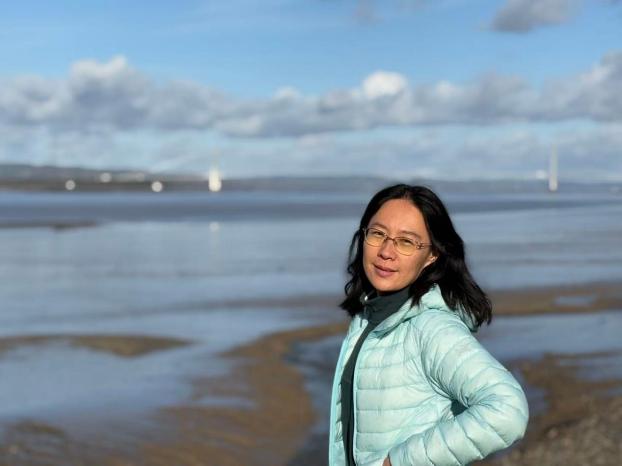
Reporter Profile:
Zhong Ming is an Associate Professor and Deputy Head of the Department at the School of Geography and Planning, Sun Yat-sen University. He serves as a member of the Committee on Natural Disaster Risk and Integrated Disaster Mitigation of the Geographical Society of China, and as a member of the Committee on Resource Engineering of the China Society of Natural Resources. He has successively led projects funded by the National Natural Science Foundation of China (NSFC) General Program and Youth Program, the National Key R&D Program of China under the special topic of Major Natural Disaster Prevention and Public Safety, the Natural Science Foundation of Guangdong Province (General and Youth Programs), and the Guangzhou Basic and Applied Basic Research Project. He has published over 30 high-level journal papers both domestically and internationally, been granted 3 patents, and registered multiple software copyrights. He has received the Second Prize of the Science and Technology Progress Award from the Ministry of Education and the Second Prize of the Science and Technology Award from the Changjiang Water Resources Commission of the Ministry of Water Resources. His research outcomes have been successfully applied in flood disaster prevention practices in Guangdong, Guizhou, Hubei, Shanxi, and other provinces in China.
Reporter Abstract:
Under the new conditions of climate change and urban hydrological effects, the frequency and intensity of extreme hydrometeorological events have increased significantly, leading to continuously escalating flood risks. The changing environment has altered the characteristics of flood risk, and traditional engineering measures face bottlenecks—continuously raising design flood protection standards still cannot avoid inundation losses. The compound impacts of variables such as extreme rainfall, urban waterlogging, river floods, and typhoon storm surges are becoming major threats to urban safety and sustainable development, posing new challenges for urban flood research.
This presentation will introduce how to integrate physical mechanisms with deep learning modeling techniques to conduct research on flood risk simulation and disaster prevention and control. The content covers knowledge-guided fusion methods for runoff forecasting, risk diffusion effects of multivariate floods, analysis of flood characteristics under differentiated urban development patterns, and carbon emission accounting for road network recovery under flood impacts. Focusing on the formation mechanisms of flood risk under changing environments, risk digital intelligent modeling, risk assessment, and disaster mitigation effects, this study explores scientific pathways for multivariate flood risk management and urban sustainable development.
School of Earth and Environmental Sciences, Lanzhou University
Key Laboratory of Western China's Environmental Systems, Ministry of Education, China
July 7, 2026


