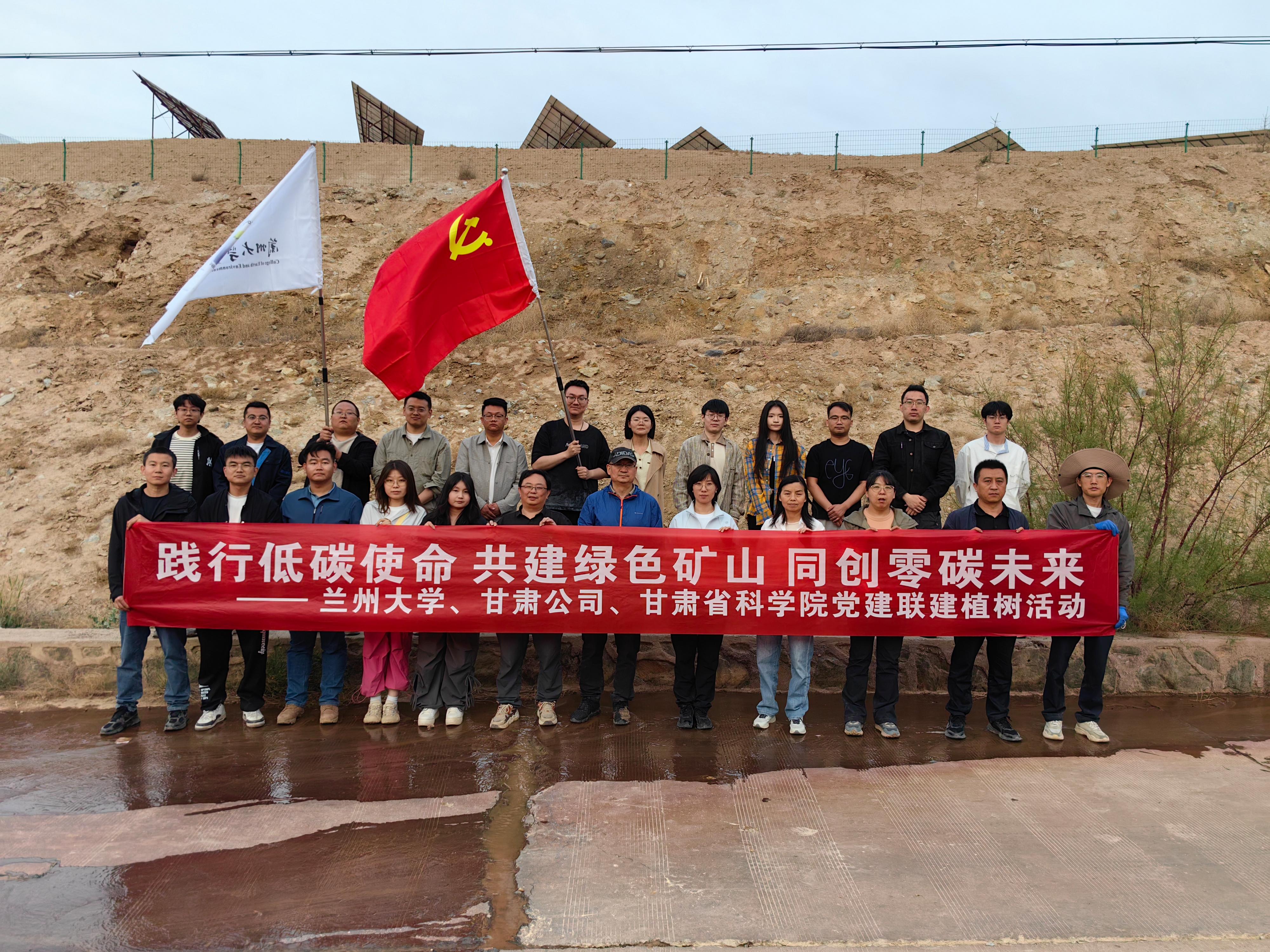
On the afternoon of May 18, 2026, representatives of faculty and students from the School of Earth and Environmental Sciences, Lanzhou University, visited the waste rock dump of the Deep-Level Copper Mine in Baiyin City to jointly carry out a practical activity themed "Party Building Leads Ecological Restoration, University and Enterprise Jointly Plant a Green Future" with CNNC Huineng Gansu Company and the Gansu Academy of Sciences. Following the joint establishment of a teaching practice and research base by the two sides in 2025, this activity is another concrete practice to deepen the integration of industry and education and serve the ecological protection of the Yellow River Basin. Li Ting, Deputy Secretary of the Party Committee of the School of Earth and Environmental Sciences, Lanzhou University, Professor Wang Shengli, Associate Professor Cui Jiaying, and 17 graduate students participated in the activity.
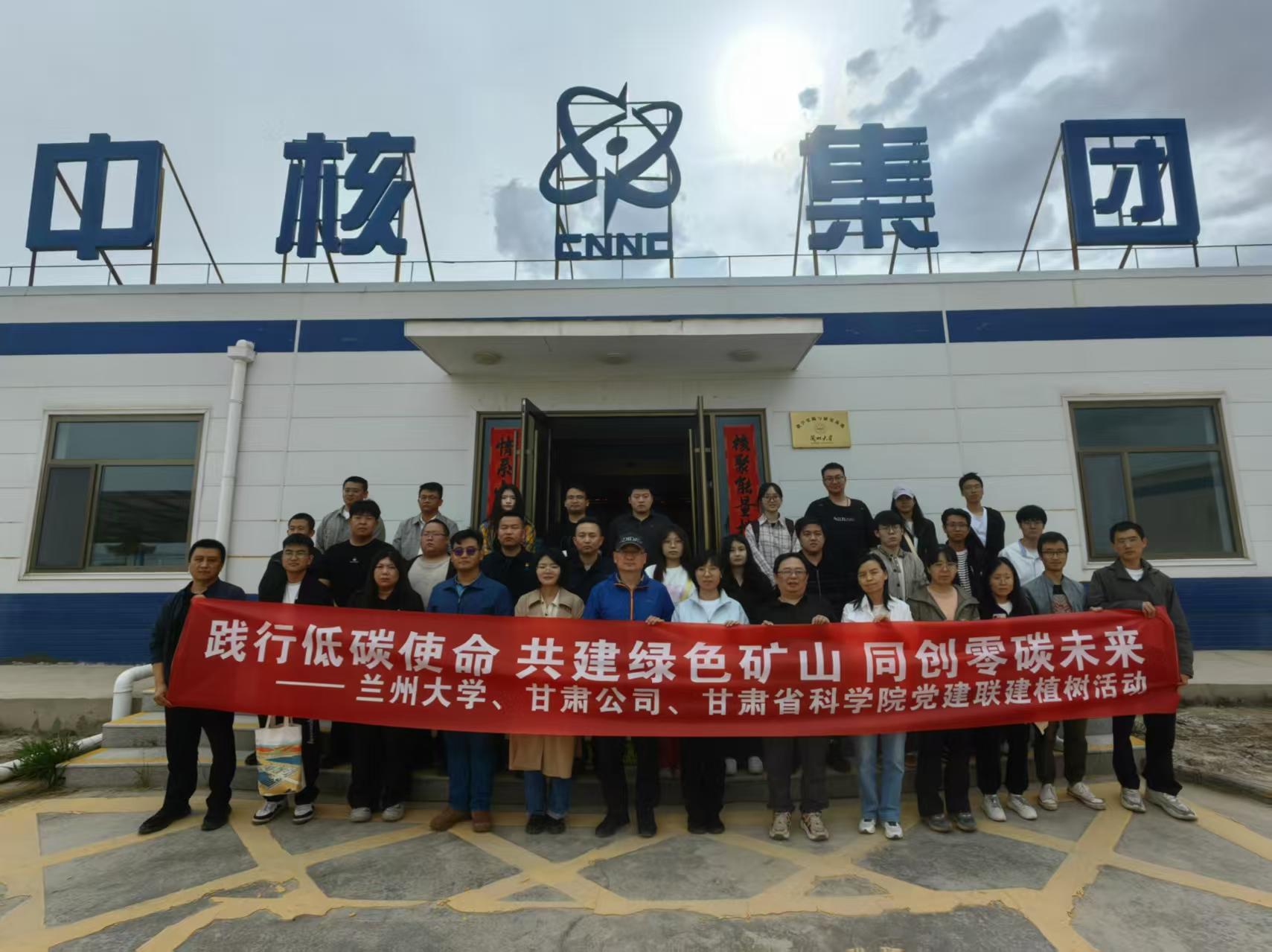
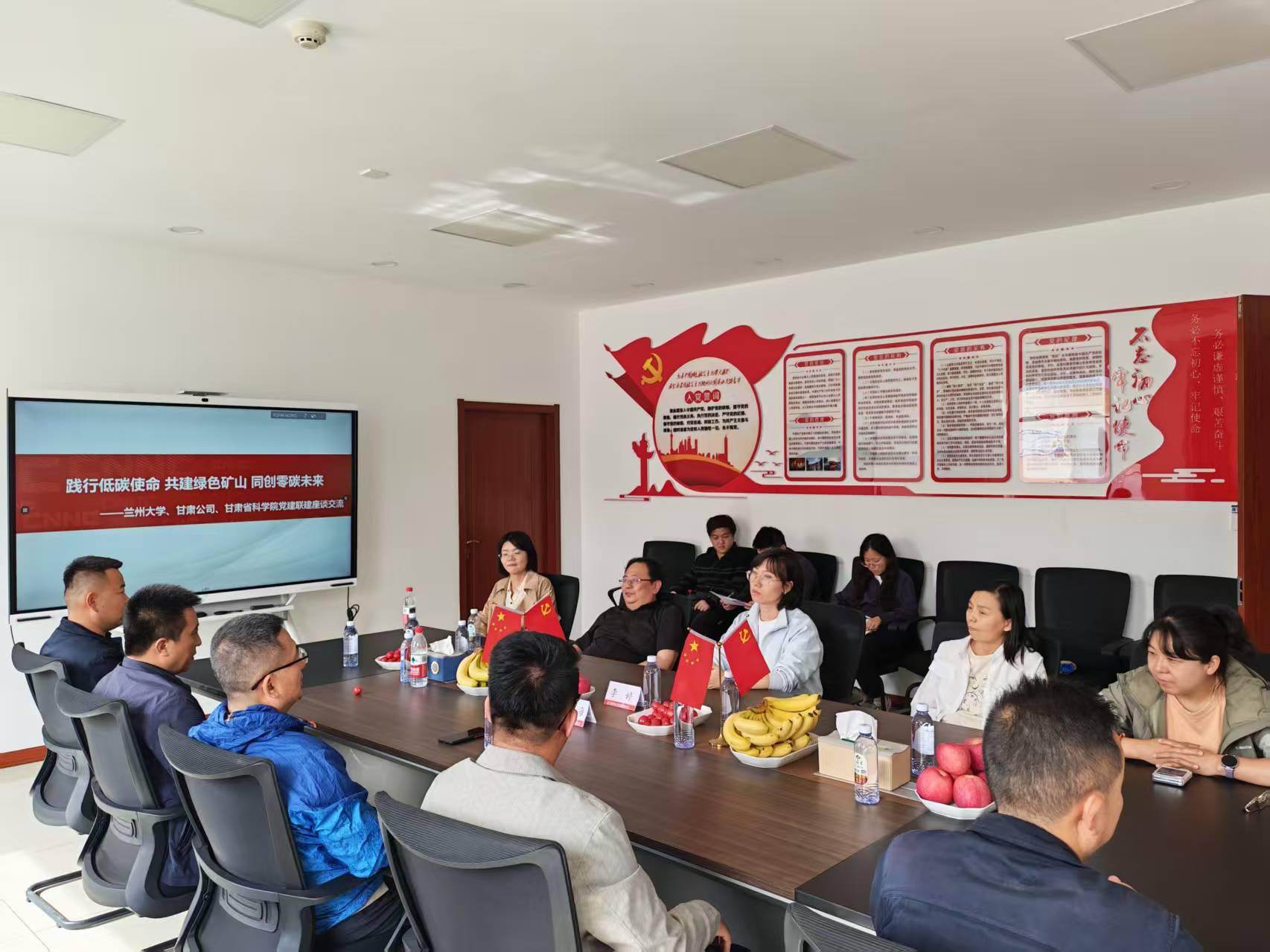
At the beginning of the activity, representatives of the three parties held a symposium at the CNNC Huineng Baiyin Huihe Photovoltaic Power Station to exchange views on topics such as technological innovation in mine ecological restoration, collaborative education through industry-university-research cooperation, and new energy grid integration. Luo Lihai, Deputy General Manager of CNNC Huineng Gansu Company, stated that the company continues to explore the "photovoltaic + mine governance" model, achieving a win-win situation for ecological and economic benefits in the mining area through the coordinated development of vegetation restoration and clean energy. Li Ting mentioned that relying on the base can sustainably promote the multi-dimensional integration of "ideological and political education + science popularization + scientific research + practice", thereby expanding educational paths and enriching educational connotations. Professor Wang Shengli of Lanzhou University pointed out that moving the classroom to the frontline of ecological restoration in this practice is an important measure to promote the "integration of science and education, and the integration of theory and practice", which helps cultivate students' ability to solve complex environmental problems and promotes the improvement of regional environmental quality.
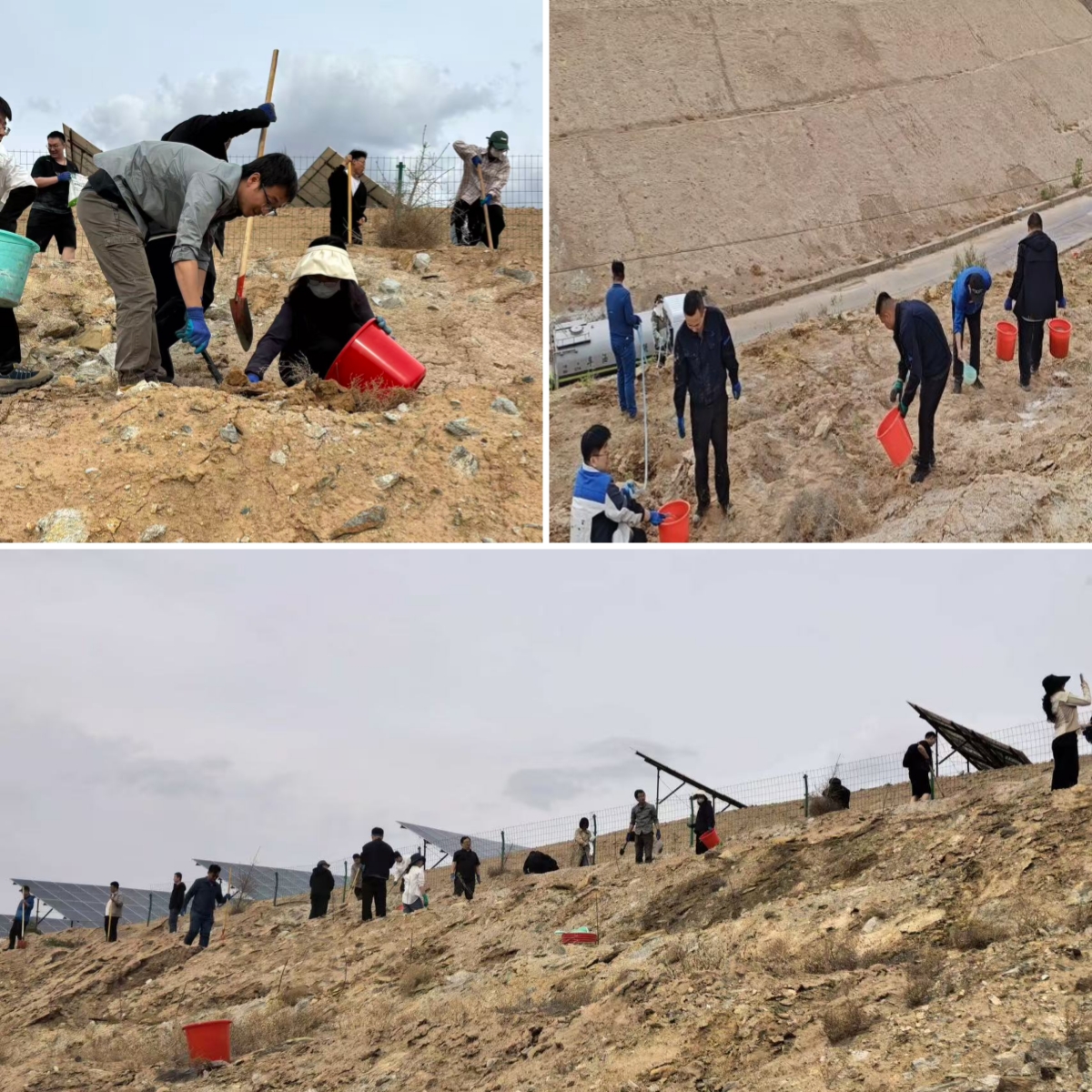
Guided by the Party flag, faculty and students worked in collaborative groups, applying lime, mixing organic and microbial fertilizers, shoveling soil, and watering the seedlings, jointly planting species adapted to arid and acidic environments on the slopes of the waste rock dump. Despite the harsh conditions in the mining area, everyone was highly enthusiastic. After an afternoon of hard work, more than 500 saplings were successfully planted, adding vibrant life to the formerly barren slopes. Graduate students participating in the activity expressed that this event gave them a more intuitive understanding of the ecological restoration of green mines and a profound realization of the significance of technology-empowered ecological governance.
This tree-planting activity is not only a vivid classroom practice of the concept that "lucid waters and lush mountains are invaluable assets" but also an in-depth practice of university-enterprise cooperation to promote ecological restoration in western China. The three parties will take this activity as an opportunity to further strengthen cooperation in tackling key research challenges, talent cultivation, and technology promotion, injecting new momentum into the ecological protection and green, low-carbon development of the Yellow River Basin. In the future, the School of Earth and Environmental Sciences, Lanzhou University will continue to deepen collaborative innovation with enterprises, support the national "dual carbon" goals, and contribute Lanzhou University's strength to building a Beautiful China.