At the invitation of the School of Earth and Environmental Sciences, Lanzhou University, Prof. Gao Hongkai from East China Normal University will visit our university for academic exchange and deliver a lecture on May 29, 2026. All faculty members and students are welcome to attend!
Title: The Root Zone—A Key Frontier in the Study of Terrestrial Hydrological Processes
Reporter: Prof. Gao Hongkai, East China Normal University
Time: 14:00-15:00, May 29, 2026 (Friday)
Venue: Room 213, Qilian Hall, Chengguan Campus, Lanzhou University
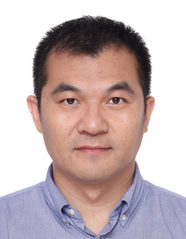
Reporter Profile:
Gao Hongkai is a Professor and Doctoral Supervisor at the School of Geographic Sciences, East China Normal University. His research and teaching focus on the fundamental theories of watershed hydrology, ecohydrology, and cryospheric hydrology. His major achievements include: (1) proposing the "optimal root zone water storage theory", establishing a new method for retrieving root zone water storage capacity from land surface fluxes, and revealing the adaptive mechanism by which the root zone of watershed ecosystems responds to drought; and (2) independently developing a landscape-scale ecohydrological model, proposing a new topography-based runoff generation parameterization scheme that accounts for landscape heterogeneity such as vegetation, snow cover, glaciers, and permafrost, and integrating multi-source information—including ground measurements, remote sensing, and isotopes—to constrain the model, thereby reducing simulation uncertainty and improving forecast accuracy in data-scarce regions. He has published more than 100 academic papers and has led six national-level projects, including an international cooperation project of the National Key R&D Program and projects funded by the National Natural Science Foundation of China, namely the National Science Fund for Excellent Young Scholars, the General Program, and the International Cooperation and Exchange Program. He currently serves on the editorial boards of Hydrology and Earth System Sciences and Journal of Hydrology.
Report Abstract:
The root zone is the active layer for the cycling of water and matter and for energy exchange within the terrestrial surface system. Shaped by the combined effects of the water, soil, atmosphere, biosphere, and cryosphere, as well as human activities, it is a key to terrestrial hydrology research. However, because the root zone lies underground and is difficult to observe directly, it has become a bottleneck constraining research on terrestrial hydrology and Earth surface systems. From the perspective of Earth system science, this report first clarifies the definition of the root zone in ecohydrology and land surface processes; it then explores the functions of the root zone in the interactions among the Earth's spheres; next, it elaborates on the main theoretical foundations and model-building methods of root zone ecohydrology research; finally, it looks ahead to the significance of the dynamic root zone for the simulation and projection of terrestrial hydrology, dynamic vegetation, and land surface processes in Earth system models.
School of Earth and Environmental Sciences, Lanzhou University
May 29, 2026


