At the invitation of Prof. Huang Tao from the School of Earth and Environmental Sciences, Lanzhou University, Prof. Dai Hancheng from the College of Environmental Sciences and Engineering, Peking University, visited our university for academic exchange and delivered a lecture on July 24, 2026.
Title: Accelerated Decarbonization Pathways for China's Hard-to-Abate Industrial Sectors
Reporter: Prof. Dai Hancheng, College of Environmental Sciences and Engineering, Peking University
Time: 15:00-16:30, July 24, 2026 (Friday)
Venue: Room 1009, Guanyun Building, Chengguan Campus, Lanzhou University
Moderator: Prof. Huang Tao, School of Earth and Environmental Sciences, Lanzhou University
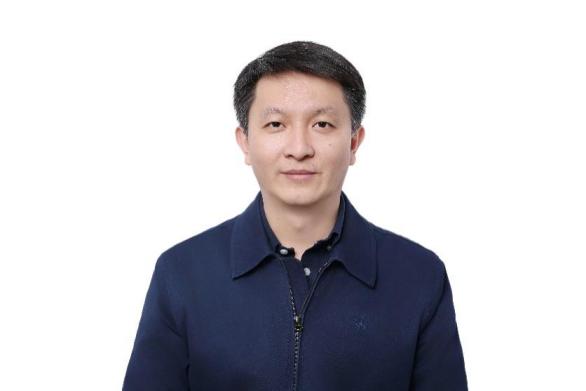
Reporter Profile:
Dai Hancheng is a tenured Associate Professor, Researcher, Doctoral Supervisor, and Head of the Department of Environmental Management at the College of Environmental Sciences and Engineering, Peking University. His long-term research focuses on sustainable management of climate and environment and integrated decision-making assessment, dedicated to innovations in underlying modeling theories and applications for complex systems. He leads the independent development of the large-scale Integrated Model of Energy, Environment, and Economy (IMED), which has been listed by the UN Environment Programme as a representative Chinese model supporting the Global Environment Outlook 7. He has led projects funded by the National Natural Science Foundation of China (NSFC) Youth, General, and Excellent Youth Programs, as well as projects under the National Key R&D Program. He has published over 100 academic papers in journals such as Nature Food, Nature Communications, Joule, and One Earth, with more than 20 citations in the IPCC AR6 report and over 10,000 total citations. He has been consecutively listed among the "World's Top 2% Annual Highly Cited Scientists" and the "World's Top 2% Career-Long Impact Scientists".
Report Abstract:
The decarbonization pace of China's industrial sector is not only critical to achieving the country's "dual carbon" goals but also profoundly influences the global carbon budget. Achieving deep industrial decarbonization requires balancing the pace of transition with economic feasibility, and scientifically assessing the multi-dimensional comprehensive impacts of different technological pathways and policy timelines on system costs, carbon budgets, and energy structures, thereby providing quantitative support for decisions that balance emission reduction efforts with economic efficiency. A bottom-up energy system optimization model that integrates endogenous technological learning and facility-level parameters is a powerful tool for characterizing the "policy–deployment–cost" dynamic feedback and supporting the design of industrial decarbonization pathways. This lecture will introduce the frontier advances and typical applications of this approach. Using the study of accelerated decarbonization pathways for China's five major hard-to-abate industrial sectors as a case study, it will demonstrate how early policy actions can reduce long-term system costs through learning effects and protect the global carbon budget, as well as the decisive significance of pathway choices during the critical window period of 2035–2040 for the success or failure of the transition.
School of Earth and Environmental Sciences, Lanzhou University
July 28, 2026


