Amid the gentle fall of phoenix flowers and a hint of autumn chill, Classroom B302 in the Qinling Hall at Lanzhou University was bustling with energy. On September 22, Academician QIN Dahe of the Chinese Academy of Sciences delivered an online lecture titled Introduction to Cryospheric Science for the 2023 cohort of undergraduates from the College of Earth and Environmental Sciences. Associate Professor GAO Tanguang assisted Academician QIN in completing this "first lecture of the new semester" of the Cryospheric Science course.
During the lecture, Academician QIN elaborated on the conceptual framework and research scope of the cryosphere and cryospheric science, examined its interactions with the climate system, discussed its role in socioeconomic development, and addressed its connections with geopolitical dynamics. He emphasized the importance of systematic learning through three foundational pillars—fundamental knowledge, core concepts, and essential skills—and stressed the integration of theory with practice to build a solid groundwork for future scientific research.
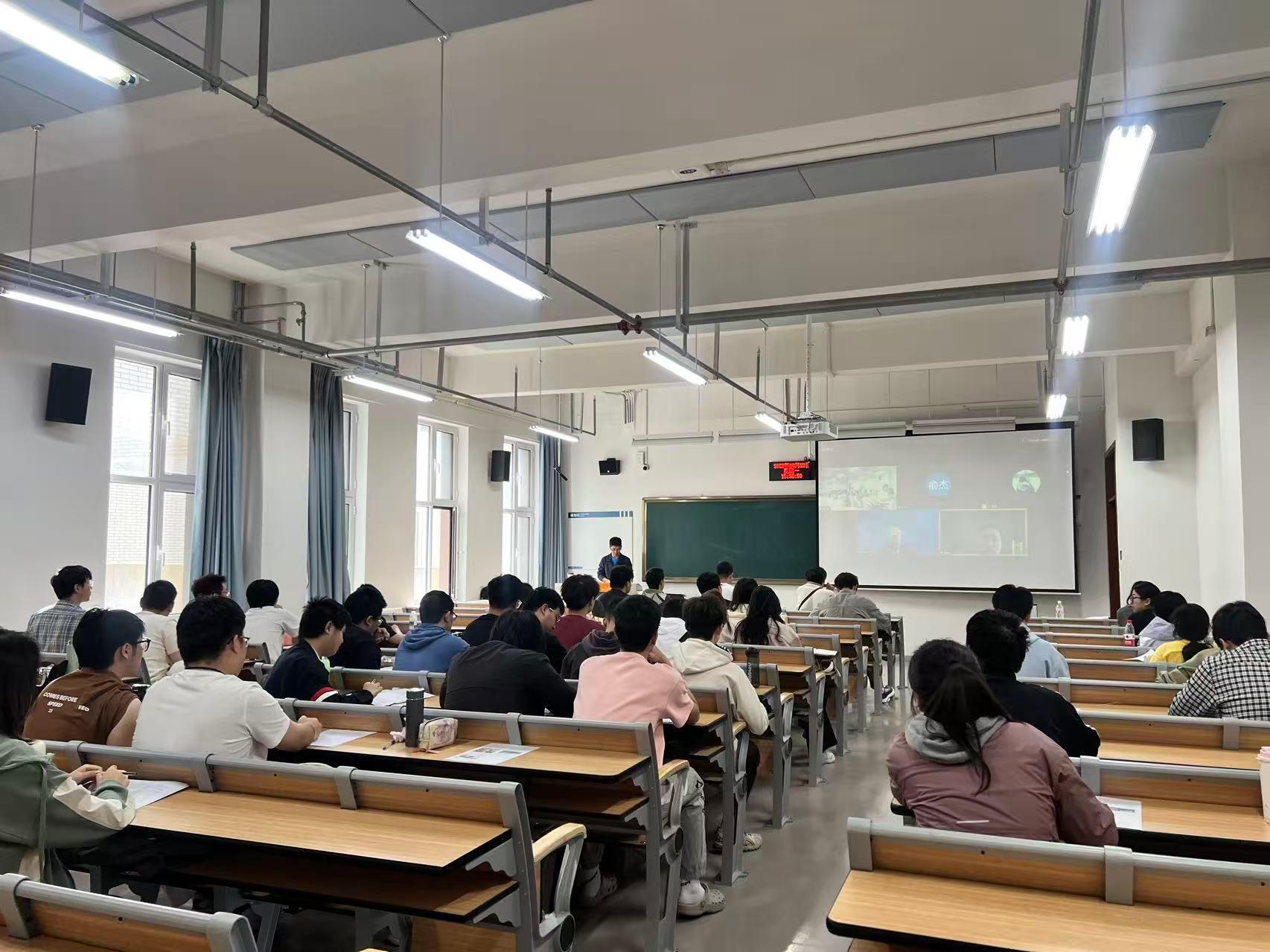
Academician QIN emphasized that against the backdrop of global warming, the cryosphere is undergoing rapid and extensive retreat, accompanied by frequent disasters and extreme events. He expressed his hope that students would deeply contemplate the underlying causes of these abrupt changes and their impacts on both the natural environment and human society, while actively engaging with the forefront of cryospheric science. Additionally, Academician QIN encouraged students to master English proficiency and accurately employ specialized terminology in cryospheric science.
During the session, Researcher XU Xinwu facilitated online interactive discussions with students through methods such as listening comprehension exercises, reading error correction, and presentations by student representatives. To further consolidate the students' understanding of the course content, Associate Professor GAO Tanguang organized in-class group discussions, after which representatives from each group shared their insights. Their contributions were commended by Researcher XU as an encouragement for continued academic diligence. This course significantly enriched the students' understanding of cryospheric science, sparked their interest in the field, and proved to be highly rewarding for all participants.
Profile of Academician QIN Dahe:
Academician QIN Dahe is a distinguished member of the Chinese Academy of Sciences (CAS) and a fellow of The World Academy of Sciences (TWAS). He spearheaded the establishment of the State Key Laboratory of Cryospheric Science and developed the theoretical framework of cryospheric science. He has played a leading role in the Third, Fourth, and Fifth Assessment Reports of the Intergovernmental Panel on Climate Change (IPCC), and directed the design and compilation of China's national scientific assessment reports on climate and ecological environment evolution, as well as the national evaluation on extreme weather events, disaster risk management, and adaptation. He also led the Strategic Research on the Development of Meteorological Services in China, proposing the innovative concept of "Public Meteorology, Safety Meteorology, and Resource Meteorology". As former Chief Scientist of the National Basic Research Program (973 Program) and leader of the National Natural Science Foundation of China (NSFC) Research Group on Cryospheric Science, he has authored or co-authored over one hundred publications. His outstanding contributions have been recognized with numerous prestigious awards, including the International Meteorological Organization (IMO) Prize, the Volvo Environment Prize, the Second Prize of the National Natural Science Award, and First Prizes for Natural Sciences from both the Chinese Academy of Sciences and Gansu Province. In recent years, he has also received the CAS Outstanding Achievement Award, the International Geographical Union (IGU) Lifetime Achievement Award, and the International Union for Quaternary Research (INQUA) Lifetime Achievement Award.


