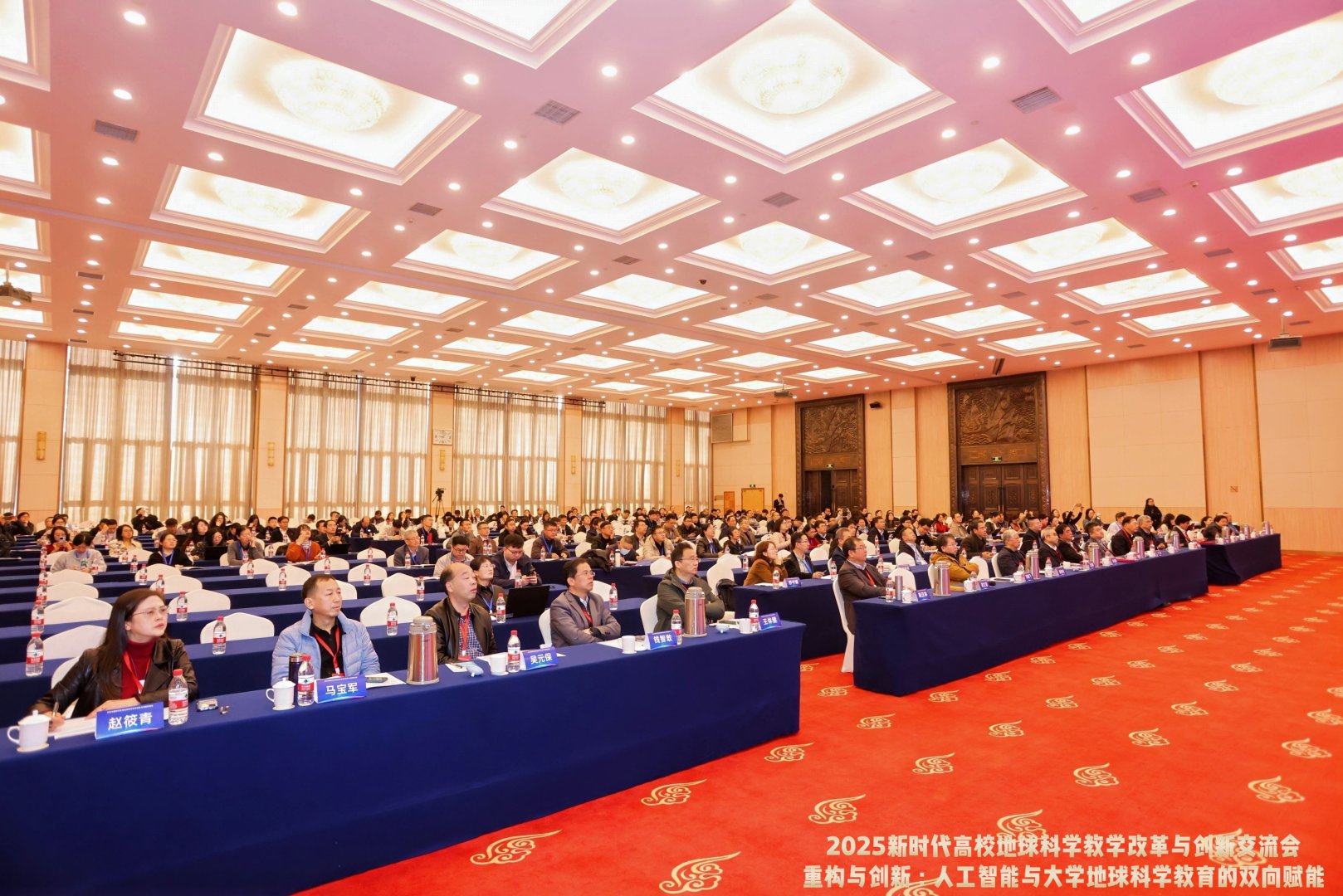
From November 28 to December 1, 2025, the Conference on Teaching Reform and Innovation in Geoscience Education for Universities in the New Era was grandly held in Hangzhou. The conference was jointly organized by the Teaching Advisory Committee for Geology, Geographical Sciences, Atmospheric Sciences, Ocean Sciences, Geophysics, and Geological Engineering under the Ministry of Education, in collaboration with Higher Education Press, and hosted by Zhejiang University. More than 300 experts and representatives from over a hundred universities, research institutes, and scientific institutions across the country gathered in Hangzhou to engage in in-depth discussions and exchanges on several core topics. These topics encompassed key areas such as exploring pathways for geoscience discipline development and the independent cultivation of outstanding innovative talent, innovative models for AI-empowered curriculum design and practical training in university geoscience education, and optimization strategies for teaching and resource development in practical and field-based courses. The conference provided a high-level platform for participants to share ideas and integrate insights.
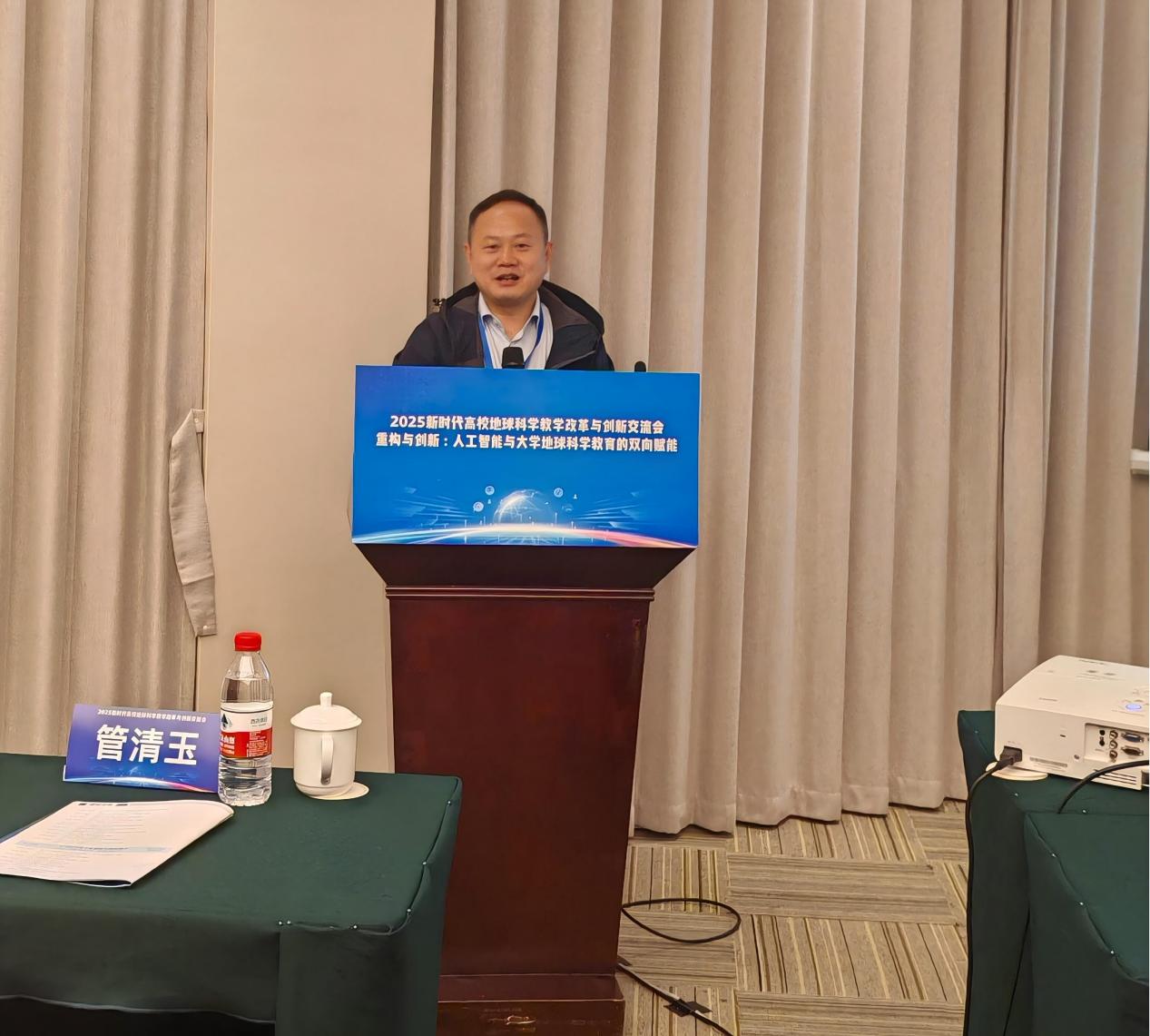
To fully showcase the teaching achievements of our faculty on the platform of teaching seminars and to provide teachers with a valuable opportunity to stay updated on the forefront of educational reform and draw upon advanced experiences, the College attached great importance to this conference. A delegation of five members attended the meeting, including Professor Guan Qingyu, Vice Dean for Teaching; Professor Li Zhuolun, Director of the Center for Faculty Teaching Development; and Professor Mu Cuicui as a faculty representative. At the parallel session on "Discipline Development and Curriculum Teaching in Geographical Sciences", Vice Dean Professor Guan Qingyu served as the moderator. He delivered a presentation titled "Current Status and Pathway Exploration of First-Class Undergraduate Program Development in Geography at Lanzhou University", detailing the specific practices and explorations in constructing a top-tier geography program from multiple dimensions. These included innovations in talent cultivation models, integrated undergraduate-graduate training mechanisms, reforms in fieldwork and practical teaching, and the selection of "Outstanding Field Teaching Teams". He also provided an in-depth analysis of the remarkable achievements made in areas such as developing first-class courses, creating high-quality teaching materials, and enhancing the quality of talent cultivation, engaging in lively interaction and exchange with the attendees.
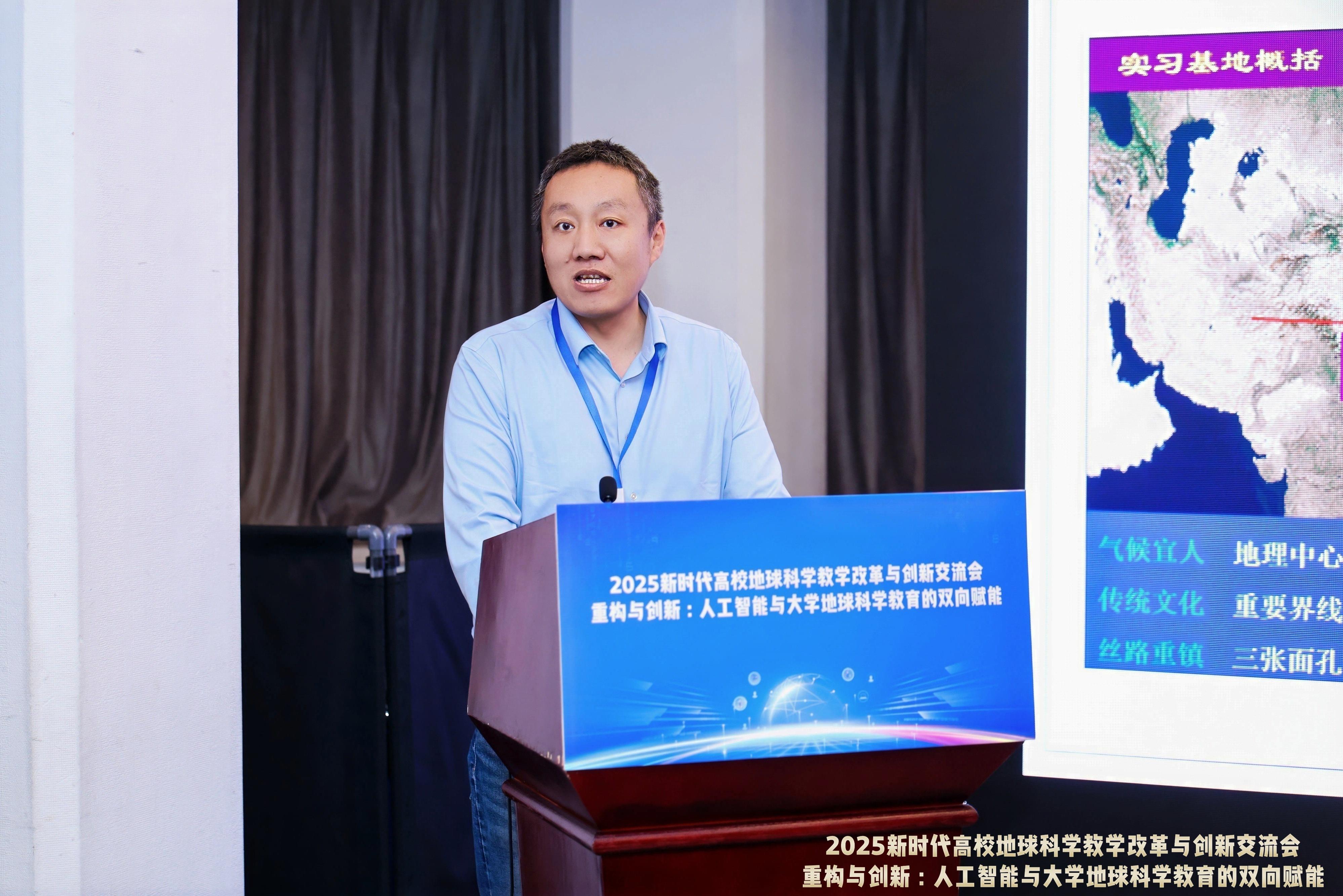
Meanwhile, at the parallel session on "Teaching and Resource Development for Practical and Field-Based Courses", Professor Li Zhuolun served as the host. Under the title "Progress and Prospects of the 'Discovery Program' Joint Geography Fieldwork Between Two-Region Universities", he systematically elaborated on the "trinity" fieldwork teaching system and the new cross-regional collaborative education model established through Lanzhou University's "Discovery Program" and the joint geography fieldwork activities between universities in two regions. He comprehensively showcased Lanzhou University's exemplary practices and fruitful achievements in fieldwork teaching from multiple aspects, including the in-depth integration of ideological and political education into the curriculum, the optimized formation of fieldwork teams, the meticulous design of fieldwork content, and the scientific planning of fieldwork routes. His presentation provided valuable, referential experience for other institutions of higher education.
During the conference, the attending delegates engaged in extensive and in-depth exchanges and discussions with experts from peer institutions on the era-defining theme of deeply integrating artificial intelligence with university geoscience education in the digital-intelligent age. Topics covered included program development, teaching materials and course design, innovation in talent cultivation models, the construction of practical training resources, and the integration of ideological and political education into curricula alongside teaching reforms. The College will seize this conference as an opportunity to continue monitoring cutting-edge trends in educational reform, actively learn from advanced experiences, persistently explore innovations, and strive to propel geoscience education to new heights.


